Camp
Humanoid robotics introduction
Students meet the humanoid robot, learn the system parts, connect commands to visible robot behavior, and understand how the lab works.
 Cherry Creek
iCode Cherry Creek Robotics Academy
Camps introduce students to humanoid robotics. The academy is where they go deeper: preparing for university-level engineering programs by solving real-world problems with ROS 2 concepts, code, sensors, movement, testing, and engineering judgment.
Camps to academy
Humanoid robotics camps give students the first hands-on introduction: meet the robot, learn the lab flow, and see how code becomes physical behavior.
The Robotics Academy prepares students for university-level engineering programs by helping them solve practical problems, build multi-step robot workflows, and understand how modern robotics systems use platforms like ROS 2 to organize sensing, control, and automation.
Students meet the humanoid robot, learn the system parts, connect commands to visible robot behavior, and understand how the lab works.
Students move from first exposure into applied challenges: ROS 2 concepts, movement, sensing, decision logic, workflow design, and iteration.
Students combine smaller behaviors into a larger robot workflow and present the engineering choices behind what they built.
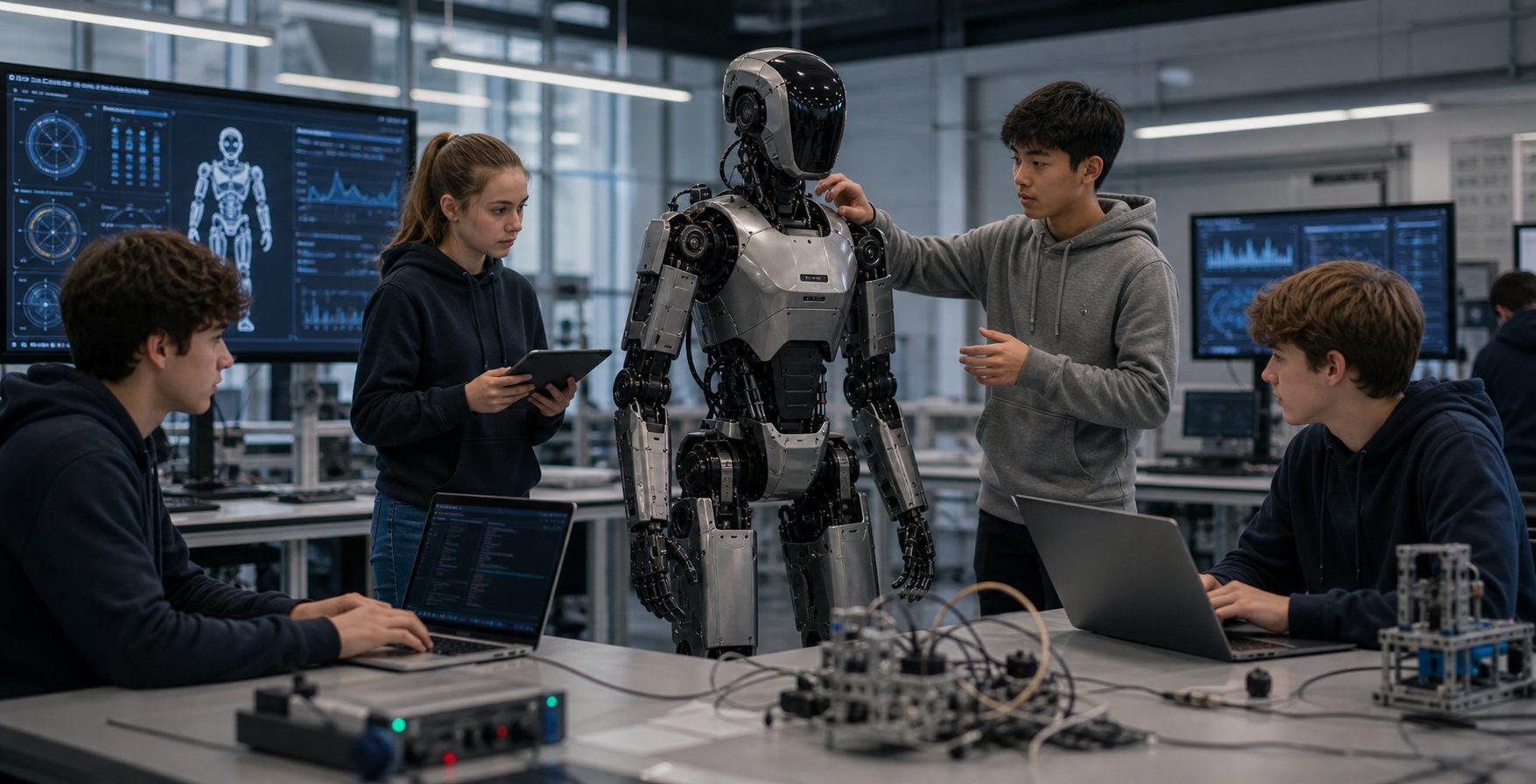
Students work with a real humanoid robotics platform, using the robot as the center of each engineering discussion instead of treating robotics as a screen-only coding exercise.
How students build
Students do not just watch the robot move. The group starts with a specific real-world problem, breaks it into smaller robot behaviors, maps those behaviors to software components, and tests each piece until the full workflow works.
Design a robot that greets a guest, asks what they need, points them to the right station, and signals an instructor if help is needed.
Split the problem into steps: detect a person, greet them, listen for a choice, decide the next action, gesture toward the station, and reset.
Students model separate parts for input, decision logic, movement, and feedback, then discuss how messages connect those parts.
If the robot points too late or responds to the wrong cue, students isolate that behavior, adjust timing or logic, and retest.
The finished demo shows the full sequence: greet, ask, decide, gesture, escalate if needed, and return to ready for the next guest.
Robotics Academy
iCode can support a robotics pathway from pre-reader robot logic through competition robotics and into humanoid robotics. This campaign is focused on the advanced end of that path: students working with a serious humanoid robotics platform and learning concepts that prepare them for future engineering coursework.
The academy gives students a place to build robotics confidence over time by solving practical problems with a real humanoid robotics platform, including the ROS 2 ideas used across modern robotics engineering.
Long-term pathway
Younger students can enter robotics earlier through age-appropriate tools, while humanoid robotics camps introduce the advanced platform. The academy is where students keep building toward university-level engineering readiness through real-world problem solving with code, ROS 2 concepts, movement, sensors, testing, and teamwork.
Young students can begin with screen-free sequencing and cause-and-effect thinking using VEX 123-style robots.
As students grow, robotics can expand into team design, mechanisms, sensors, code, testing, and competition-style problem solving.
The camps and academy apply that progression to a more advanced system: a robot that can sense, move, respond, and complete multi-step tasks.
Next step
Book a Google Calendar call to ask questions and discuss the right robotics academy path for your student.